
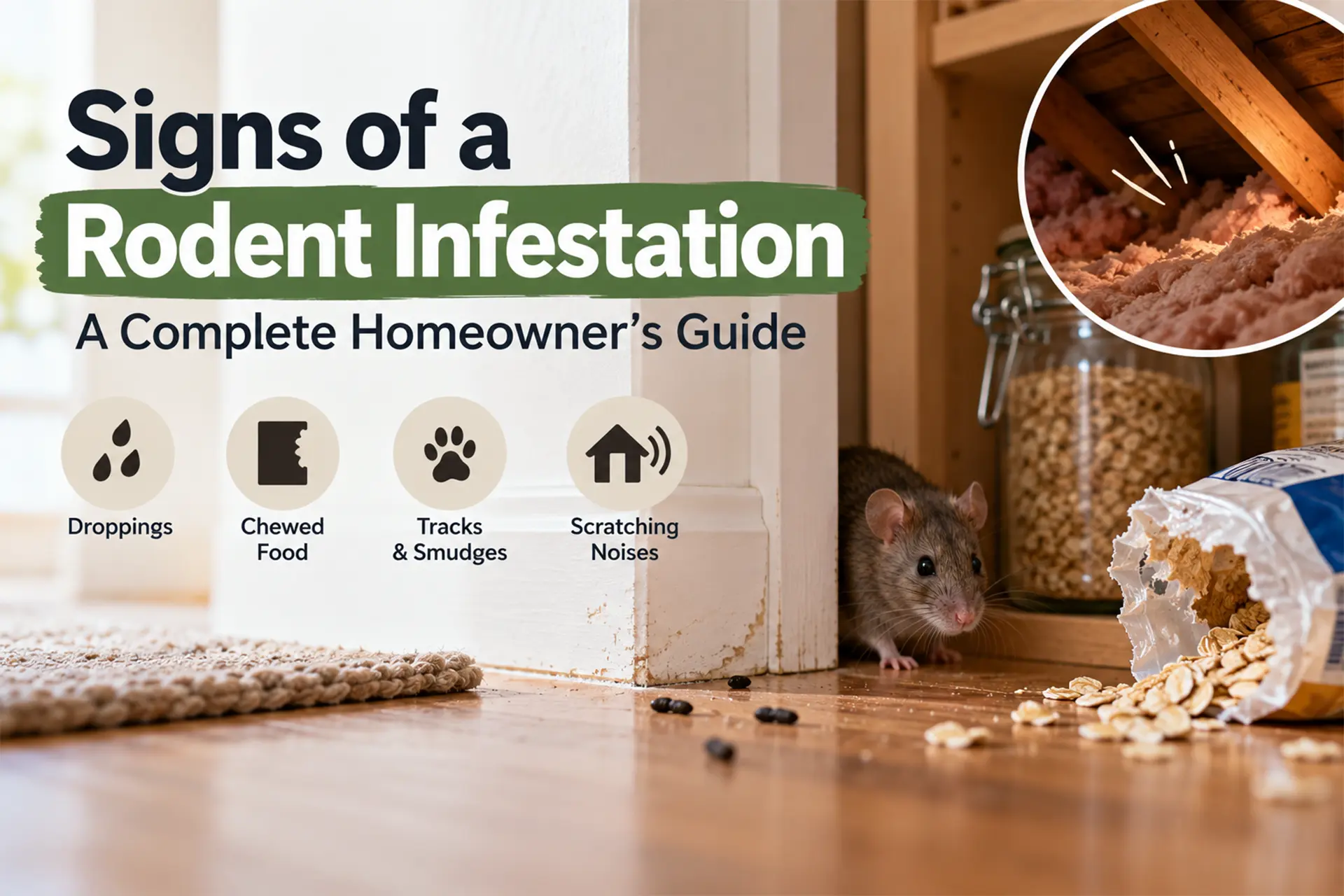
Signs of a Rodent Infestation: A Complete Homeowner’s Guide
Have you heard scratching noises in your attic late at night? Maybe you’ve discovered small, dark droppings beneath the kitchen sink or noticed something chewing through food packaging in your pantry.
These seemingly minor clues could be the early signs of a rodent infestation.
Rats and mice often settle into hidden spaces long before homeowners see them. They may travel through walls, nest in insulation, or search for food while everyone is asleep.
Recognizing the warning signs early can help you identify suspicious activity, limit property damage, and reduce potential health risks.
This guide explains how to tell if you have rodents, where to inspect your home, how to distinguish rats from mice, and what steps to take if you find evidence of an infestation.
What Are the Early Signs of a Rodent Infestation?
The earliest rodent infestation warning signs are often subtle. A combination of droppings, unusual noises, and physical damage is generally more informative than any single clue.
Here are ten signs worth investigating.
1. Rodent Droppings Around Your Home
Finding rat and mouse droppings is one of the most recognizable signs of rodent activity.
Mouse droppings are typically small, dark, and shaped somewhat like grains of rice. Rat droppings are generally larger and thicker.
Look for them:
- Inside cabinets and pantry corners
- Beneath sinks and behind appliances
- Along baseboards
- Near stored food or pet supplies
- In garages and attics
Droppings establish that rodents have visited an area, but their appearance alone cannot reliably determine whether the infestation is ongoing.
Important: Never pick up droppings with bare hands or sweep them into a dustpan. Follow the CDC’s safe rodent cleanup recommendations.
2. Scratching and Scurrying Noises
Do you hear scratching, tapping, or quick movements above the ceiling after dark?
Rats and mice are often active at night, making nighttime noises a common early warning sign.
Listen for movement inside walls, above ceilings, around attic insulation, or behind kitchen cabinets.
The sounds may become more noticeable when the house is quiet.
However, squirrels, birds, and other animals can produce similar noises. Sound alone cannot confirm which animal is responsible.
3. Gnaw Marks on Furniture, Wires, and Packaging
Rodents repeatedly gnaw on materials to maintain their continuously growing front teeth.
Signs include:
- Chewed cardboard or plastic packaging
- Small bite marks along wooden trim
- Damaged insulation around electrical wiring
- Enlarged holes around cabinets or walls
Look closely around food storage areas and potential entry points.
Fresh-looking exposed wood or newly damaged packaging may suggest recent activity, especially when accompanied by droppings.
Damaged electrical wiring deserves immediate attention because it can create a fire hazard.
4. Rodent Nests and Shredded Materials
Rats and mice gather soft materials to construct nests in sheltered locations.
Common nesting materials include shredded paper, fabric, cardboard, insulation, and dried vegetation.
You might discover a loose collection of these materials behind appliances, inside storage boxes, beneath furniture, or within attic insulation.
A pile of shredded material does not automatically indicate a rodent nest. Nearby droppings, gnaw marks, or signs of repeated movement strengthen the suspicion.
Avoid disturbing a suspected nest before reviewing safe cleanup procedures.
5. Unusual Musky or Unpleasant Odors
A persistent stale, musky, or ammonia-like odor can indicate rodent urine accumulating in a poorly ventilated area.
The smell may be noticeable inside closets, under sinks, near wall cavities, or in enclosed storage spaces.
A stronger odor can result from accumulated waste or a dead animal.
Because moisture problems, plumbing leaks, and other pests can also cause unpleasant smells, investigate the source rather than assuming rodents are responsible.
6. Grease Marks Along Walls and Baseboards
Rats and mice frequently travel along familiar routes, particularly beside walls and structural edges.
Repeated contact with their fur can leave dark, greasy smudges along baseboards, pipes, beams, and narrow openings.
These marks are sometimes called rub marks.
Pay attention to stains near suspected entry points, particularly when other signs appear nearby.
Texas A&M AgriLife identifies greasy smears and established travel routes as useful clues during rodent inspections.
7. Footprints and Tail Marks
Dusty surfaces can reveal small footprints or narrow lines left by rodent tails.
Check undisturbed areas such as garage shelves, attic surfaces, storage rooms, and spaces behind appliances.
Tracks may indicate the direction rodents are traveling and help identify frequently used pathways.
You do not need to handle the tracks or spread additional dust to investigate. Photograph existing marks and look for other evidence nearby.
8. Damaged Food Packaging
Rodents are attracted to accessible food, including cereals, grains, snacks, pet food, and birdseed.
Check pantry shelves for small holes in packaging, spilled contents, or gnawed container edges.
Food packaging damage becomes especially concerning when accompanied by droppings.
Discard food that may have been contaminated by rodents. Store unaffected food in sturdy, tightly sealed containers to prevent further access.
9. Changes in Pet Behavior
Dogs and cats sometimes react to movement or odors that homeowners do not notice.
A pet might repeatedly sniff beneath a cabinet, stare at one section of a wall, or become unusually interested in an attic access point.
These behaviors can help direct your inspection.
However, changes in pet behavior are not reliable proof of an infestation. Look for physical evidence before reaching a conclusion.
10. Live or Dead Rodent Sightings
Seeing a mouse or rat indoors confirms that at least one rodent has entered the property.
A single sighting does not establish how many animals are present, but it warrants further inspection.
Repeated sightings, particularly alongside droppings or nesting materials, increase concern about an established infestation.
Dead rodents may also indicate current or past activity. Handle disposal according to CDC recommendations rather than touching the animal directly.
Signs of Rats vs. Signs of Mice
Although rats and mice leave similar evidence, several clues can help homeowners distinguish between them.
| Feature | Rats | Mice |
|---|---|---|
| Droppings | Generally larger and thicker | Smaller, often rice-shaped |
| Noises | May produce heavier movement or gnawing sounds | Often produce lighter scratching or scurrying |
| Gnaw marks | Typically larger, more noticeable damage | Usually smaller tooth marks |
| Nesting habits | Roof rats favor elevated spaces; Norway rats often use lower areas | Commonly nest near food or inside small hidden spaces |
| Hiding locations | Attics, wall voids, crawl spaces, and outdoor burrows | Cabinets, appliances, storage boxes, and wall voids |
These differences are useful clues, not definitive identification methods. Dropping sizes overlap, and building materials can change how noises sound.
According to Texas A&M AgriLife’s guide to managing rats and mice, roof rats commonly occupy elevated spaces, while Norway rats are more likely to burrow near foundations.
If you suspect rats specifically, learn about professional rat removal options in New Braunfels.
Where Should You Look for Rodent Activity?
Knowing where rodents hide can make your inspection more effective.
Attics and Rooflines
A rodent infestation in an attic may produce nighttime movement, disturbed insulation, droppings, and shredded nesting materials.
From a safe access point, inspect visible areas around roof vents, soffits, and attic openings. Avoid stepping onto unsupported ceiling surfaces or disturbing contaminated insulation.
Walls and Ceilings
Possible signs of rats in walls include repeated scratching, gnawing noises, and activity near plumbing or utility openings.
Mice and other animals may create similar sounds. A professional inspection may be necessary to identify the source without unnecessarily opening walls.
Kitchens and Pantries
Inspect behind refrigerators, beneath sinks, inside lower cabinets, and around stored food.
Droppings, chewed packaging, and damaged materials around pipe openings are particularly useful clues.
Garages and Storage Spaces
Garages may provide access to stored pet food, cardboard boxes, and sheltered nesting locations.
Examine garage door seals, cluttered corners, and gaps where utilities enter the building.
Basements, Crawl Spaces, and Foundations
Where basements or crawl spaces are present, look for droppings, gnaw marks, and disturbed insulation.
Outside, inspect accessible foundation edges and areas beneath stored materials for burrows or openings.
How to Tell Whether a Rodent Infestation Is Active
Finding evidence of rodents does not necessarily mean they are still inside your home.
A useful approach is to document the original evidence and watch for changes without disturbing contaminated materials.
Signs suggesting ongoing activity include:
- New droppings appearing after an area has been safely cleaned
- Additional damage to food packaging or wooden surfaces
- Repeated sightings over several days
- Continued nighttime movement in the same locations
- Recently disturbed nesting materials or recurring tracks
The CDC explains that droppings reappearing after safe cleanup can indicate an active rodent presence.
By comparison, an old gnaw mark or abandoned nest may reflect previous activity.
Consider the pattern of evidence rather than relying on a single observation.
Why Rodent Infestations Shouldn’t Be Ignored
Rodents can create problems beyond the discomfort of hearing animals inside your home.
Property damage: Gnawing can affect insulation, drywall, wooden materials, stored belongings, and utility components.
Electrical hazards: Chewed wire insulation may expose conductors and increase the risk of electrical faults or fires.
Food contamination: Rodents can contaminate food and preparation surfaces through urine, droppings, and saliva.
Health concerns: Some rodents carry disease-causing organisms. Exposure may occur through contaminated materials, food, or airborne particles disturbed during improper cleanup.
The CDC’s rodent health guidance explains these risks, although not every rodent carries a pathogen and finding droppings does not mean illness will occur.
Prompt investigation is sensible without assuming the worst.
What to Do When You Discover Signs of Rodents
If you find evidence of rats or mice, focus on reducing exposure and determining where the animals may be entering.
Protect Food and Remove Attractants
Discard potentially contaminated food. Keep pantry items, pet food, and trash in tightly sealed containers.
Clean ordinary food spills, repair accessible leaks, and remove unnecessary clutter.
Document the Evidence
Photograph droppings, damaged packaging, gnaw marks, and suspected entry points without touching contaminated materials.
Record where and when you notice noises or sightings.
This information can help with future inspections.
Clean Droppings Safely
The CDC recommends the following for routine rodent waste cleanup:
- Wear rubber or plastic gloves.
- Ventilate enclosed areas before cleanup, following the CDC’s instructions for the type of space.
- Do not sweep or vacuum dry droppings, urine, or nesting materials.
- Thoroughly wet droppings with an EPA-registered disinfectant or appropriate fresh bleach solution.
- Allow at least five minutes of contact time, or follow the disinfectant label.
- Wipe up the material using paper towels and discard it in a covered garbage container.
- Disinfect affected hard surfaces, then wash your gloved hands before removing gloves and wash your hands afterward.
Never mix bleach with ammonia or other cleaning chemicals.
For extensive contamination, inaccessible insulation, or large nesting areas, seek professional cleanup guidance rather than attempting routine household cleaning.
Read the complete CDC cleanup instructions before beginning.
Check for Possible Entry Points
Inspect accessible gaps around doors, pipes, vents, and exterior walls.
The CDC notes that mice can enter through openings approximately ¼ inch wide.
If rodents are still inside, coordinate exclusion work with a plan for removing them rather than simply sealing suspected openings.
Rodent Infestation Signs in New Braunfels, TX
New Braunfels homeowners should pay particular attention to rooflines, landscaping, garages, and utility penetrations.
Mature trees and overhanging branches can provide pathways for climbing rodents to approach roofs. Dense vegetation, stored materials, and accessible outdoor food sources may also provide shelter or attract activity near homes.
Roof rats are capable climbers, making damaged soffits and unprotected roof openings worth checking.
Changes in weather and seasonal temperatures can also affect where rodents seek shelter, although indoor rodent activity is possible throughout the year.
A useful local prevention checklist is to trim vegetation away from vulnerable structures, secure outdoor food sources, inspect door seals, and address visible gaps.
For recurring entry problems, explore rodent exclusion and home-sealing solutions.
When Should You Contact a Rodent Control Professional?
Some signs of a rodent infestation justify a more detailed assessment.
Consider professional help when you notice repeated sightings, extensive droppings, ongoing nighttime sounds, suspected nests inside inaccessible walls or attics, or recurring evidence after cleanup.
Damaged electrical wiring should also be assessed promptly by a qualified electrician. Avoid touching exposed wiring.
A pest control professional can help identify the animal involved, investigate entry points, and discuss appropriate removal and prevention strategies.
If the evidence suggests an ongoing problem, you can explore rodent removal services available in New Braunfels and connect with independent local pest control providers.
Frequently Asked Questions
Does seeing one mouse mean you have an infestation?
Not necessarily. One mouse may have entered through an open door or small gap. However, it could also indicate additional rodents hiding nearby. Inspect for droppings, damaged food packaging, and nesting materials. Continued sightings or recurring evidence make an established infestation more likely.
What are the first signs of rats in an attic?
Common early signs include scratching or running noises after dark, droppings, disturbed insulation, and shredded nesting materials. You may also notice gnaw marks near roofline openings. Because other wildlife can create similar disturbances, identifying the animal usually requires additional evidence.
How can I tell if rodents are inside my walls?
Repeated nighttime scratching, light scurrying, or gnawing noises may suggest animals inside a wall cavity. Droppings near pipe openings and gaps in nearby trim provide additional clues. These signs do not identify the species conclusively, so avoid cutting into walls without understanding the source.
Are rodent droppings dangerous?
Rodent droppings can carry disease-causing organisms, particularly when contaminated materials are handled or disturbed improperly. Risk depends on the circumstances and the organisms involved. Avoid bare-hand contact, never sweep or vacuum dry droppings, and follow CDC wet-cleaning and disinfection procedures.
Can rodents be present without being seen?
Yes. Rats and mice commonly use concealed spaces and may be most active when people are asleep. You might discover droppings, chewed packaging, greasy rub marks, or nesting materials without ever seeing an animal. Regularly checking these signs is more useful than waiting for a direct sighting.
Conclusion: Recognize the Warning Signs Early
The most important signs of a rodent infestation include droppings, nighttime scratching, gnaw marks, damaged food packaging, unusual odors, and nesting materials.
No single clue tells the whole story. The location, frequency, and combination of evidence can help you determine whether rodents may be active inside your property.
For homeowners in New Braunfels, regular inspections of kitchens, attics, garages, and exterior openings can make potential problems easier to identify.
If suspicious activity continues, consider arranging an assessment with a local pest control provider. Understanding the problem early can help you make informed decisions about protecting your home.